
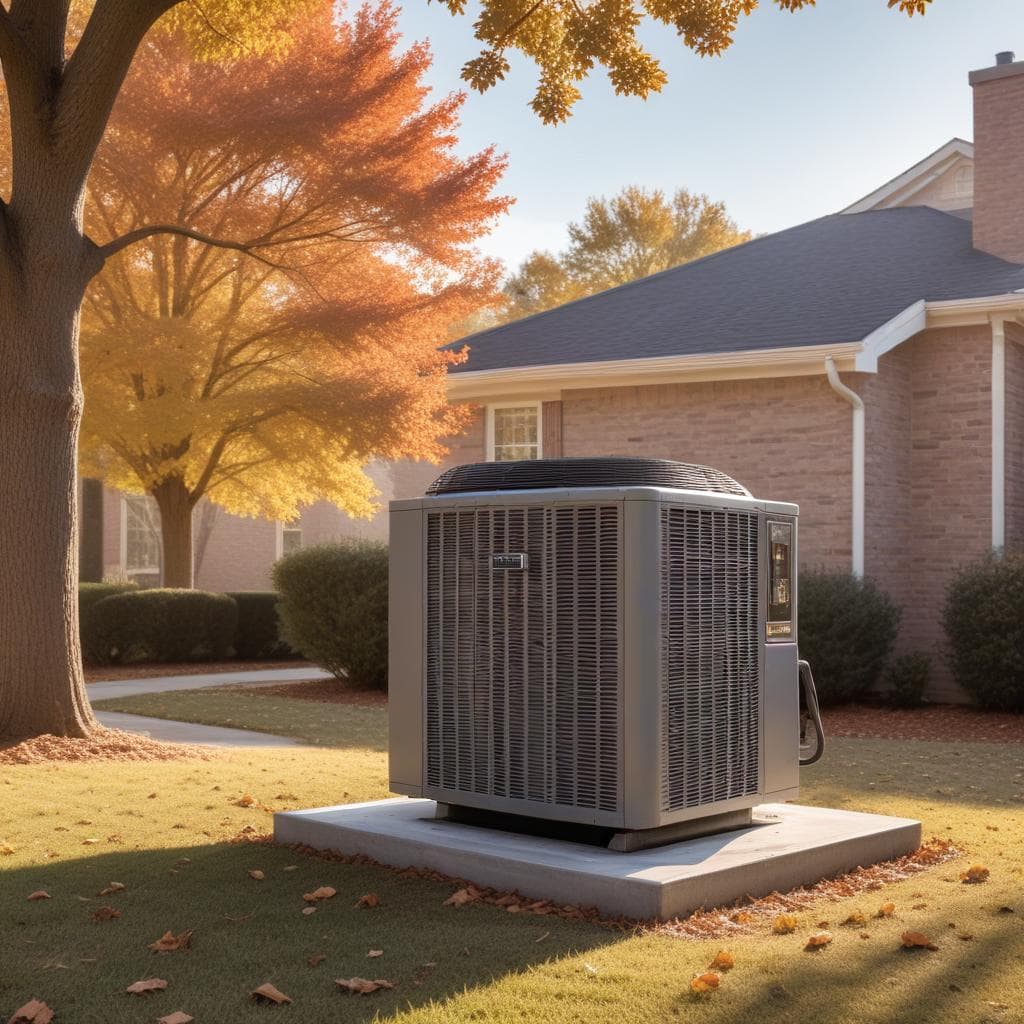
Image: Image generated with Freepik AI
Buyer tips
Fall HVAC Checklist for Nashville Buyers Before Heating Season
The AmeriKey Team ·
ENERGY STAR notes that nearly half of a typical household energy bill goes to heating and cooling. For Nashville and Middle Tennessee buyers closing into fall, that is not a trivia fact — it is a diligence item. The HVAC system you inherit will shape comfort and operating cost for the first winter you own the home, and the inspection window is the right time to ask concrete questions instead of guessing from a warm walkthrough day.
This guide is process education for buyers. It is not a contractor bid, not a promise about any specific utility bill, and not a substitute for a licensed HVAC technician or home inspector. AmeriKey Realty helps you sequence the questions; ENERGY STAR and TVA EnergyRight set the published maintenance and rebate frames.
Put HVAC on the inspection calendar — not after move-in
ENERGY STAR recommends scheduling a professional checkup of the heating system in the fall, before peak winter demand, because contractors get busy once cold weather arrives. Cooling checks belong in spring. For a purchase under contract in September or October, that timing aligns with your inspection period: you can ask whether a recent service record exists, and whether a pre-season heating check is still on the calendar before closing or shortly after.
A calm buyer checklist for Mid-TN looks like this:
- Ask for age, make/model, and service history for the furnace, heat pump, or dual-fuel setup, plus outdoor condenser information if present.
- Confirm last professional tune-up date and what was done (filter change, coil cleaning, refrigerant check, safety controls, condensate drain).
- Locate the air filter during the inspection walkthrough and note size and condition.
- Ask how the home is heated — electric heat pump, gas furnace, dual-fuel, or electric resistance — and how the thermostat is typically used in winter.
- Look for uneven rooms, weak vents, or visible duct issues in attics, crawlspaces, or unfinished basements if accessible and safe.
- Request recent utility bills when the seller will share them, so you can see seasonal patterns without inventing a neighborhood average.
- If the system is older or failing, plan a written path (further evaluation, credit, repair, or replacement timing) with your agent and a qualified contractor — not a handshake promise.
None of this replaces your home inspection contingency language. It gives you a sharper list of HVAC-specific questions inside that window.
Filters: the smallest diligence item that still matters
A dirty filter makes the system work harder, raises energy use, and can contribute to early equipment failure. ENERGY STAR’s published guidance is clear and practical:
- Check the filter about once a month, especially in heavy-use winter and summer months.
- Change it when it looks dirty.
- At a minimum, replace it every three months.
For buyers, the move-in implication is simple: know where the filter lives, what size it takes, and whether the seller left a clean one installed. Ask the inspector or a technician to show you the access panel. If the filter is packed with dust on day one of your contract, treat that as a maintenance signal — not a reason to panic, but a reason to budget for immediate replacement and a closer look at airflow.
Heat pump, furnace, or both — ask which one you are buying
Middle Tennessee homes commonly use air-source heat pumps, gas furnaces, or dual-fuel setups that combine a heat pump with a furnace backup. ENERGY STAR explains the core difference in plain language: a heat pump moves heat rather than burning fuel to create it, and an efficient air-source heat pump can deliver up to three times more heat energy to the home than the electrical energy it consumes. Heat pumps also cool in summer, so one system often covers both seasons.
Useful questions during diligence:
- Is the primary heat a heat pump or a furnace? If dual-fuel, at what outdoor temperature (or cost setting) does the furnace take over?
- Has the outdoor unit been kept clear of debris, and is the defrost cycle behaving normally in cold snaps? (A technician answers this; you ask for the report.)
- Was equipment sized with a Manual J-style load calculation when installed, or was it a like-for-like swap? ENERGY STAR stresses proper sizing; oversized or undersized gear struggles on comfort.
- If replacement is near, ask whether an ENERGY STAR certified heat pump or dual-fuel path was considered, and whether federal or utility incentives might apply — without treating any credit amount as guaranteed until you verify current program rules.
Do not invent a “typical Nashville bill” for either system. Use seller bills when available, plus a contractor estimate grounded in this home’s equipment and envelope.
Ducts and leaks hide winter cost
In forced-air homes, ducts move heated and cooled air. ENERGY STAR reports that in a typical house, about 20 to 30 percent of the air moving through the duct system can be lost to leaks, holes, and poor connections. That shows up as rooms that never catch up, higher bills, and a system that runs longer than it should.
Sealing and insulating ducts — especially runs through attics, crawlspaces, unheated basements, or garages — can improve heating and cooling efficiency by as much as 20 percent, and sometimes more, per ENERGY STAR. For buyers, the diligence move is to ask the inspector to note accessible duct condition and to budget a professional evaluation if the home has unfinished or poorly sealed distribution paths.
Local rebate path: TVA EnergyRight (when you qualify)
After closing — or when negotiating a credit tied to HVAC work — Middle Tennessee buyers often hear about TVA EnergyRight rebates administered with local power companies. Published EnergyRight guidance (accessed September 29, 2026) currently describes program paths that can include:
- Up to $300 toward qualifying duct sealing (duct system must meet TVA standards)
- $50 toward an annual tune-up on an existing heat pump or central air conditioning system
- Separate heat pump / mini-split / central AC rebate tiers for qualifying replacements
Eligibility is not automatic. EnergyRight states that rebate-eligible upgrades generally must be completed by a member of the Quality Contractor Network and meet TVA standards effective on the installation date. Rebate amounts and rules change; treat the EnergyRight pages and your local power company as the source of truth, not this article’s summary.
If you are buying in a Middle Tennessee Electric territory or another TVA distributor, ask your utility what Home Energy Checkup or Quality Contractor Network options exist for your address after closing.
How this fits the rest of buyer diligence
HVAC sits beside inspection, radon, flood, and closing-cost planning — not instead of them. Use the inspection contingency to get facts in writing. If a major repair or replacement is likely, decide with your agent whether you want a seller credit, a price adjustment, or a plan to complete work after closing with verified contractor bids.
A calm next step
If you are buying in Nashville or Middle Tennessee and want a plain-English walkthrough of how heating-season HVAC questions fit into your inspection window — filter and tune-up expectations from ENERGY STAR, heat pump vs furnace language, and where TVA EnergyRight resources fit after closing — reach out to the AmeriKey Realty team. We will help you get oriented and point you to the official program pages.
AmeriKey does not perform HVAC repairs or process utility rebates. We help you ask the right questions at the right time so your first winter in the home starts with published guidance, not guesswork.
Sources
- ENERGY STAR — How to Keep Your HVAC System Working Efficiently (accessed Sep 29, 2026)
- ENERGY STAR — Heat & Cool Efficiently (accessed Sep 29, 2026)
- ENERGY STAR — Air-Source Heat Pumps (accessed Sep 29, 2026)
- TVA EnergyRight — Duct sealing & HVAC tune-up rebates (accessed Sep 29, 2026)