
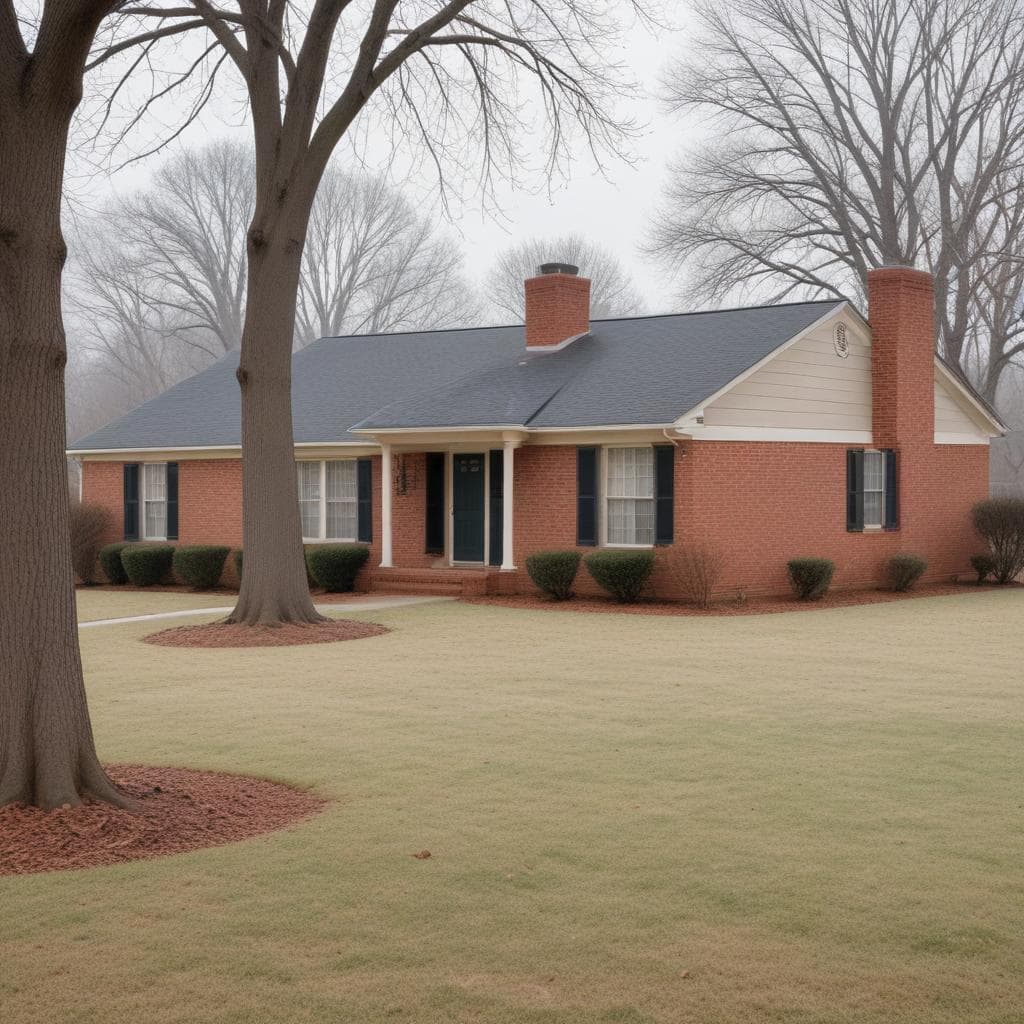
Image: Image generated with Freepik AI
Seller tips
Selling a Vacant Nashville Home This Winter: Freeze and Insurance Checklist
The AmeriKey Team ·
The National Weather Service's Nashville climate records put the average first freeze at the airport on November 11, with the earliest on record arriving October 2. If your house is listed, or about to be, and nobody is living in it, that window matters more than any staging decision. An empty home has no one to notice a cold bedroom, a dripping supply line, or a burst pipe until a showing agent opens the front door.
Vacant listings are common in Middle Tennessee for ordinary reasons: a relocation, a move-up purchase that closed first, an inherited property, or a rental between tenants. This checklist covers the freeze and insurance steps that belong on your calendar before the first hard cold, using published guidance from Metro Water Services, the American Red Cross, and the Insurance Information Institute (Triple-I). It is general education, not insurance, legal, or plumbing advice. Your policy wording and a licensed plumber have the final say.
Call your insurer before the house sits empty
Triple-I explains that most homeowners policies include a vacancy clause that limits or excludes coverage once a home has been unoccupied for a stretch, typically 30 to 60 consecutive days. Its reasoning is practical: undetected leaks, theft, vandalism, and fire do more damage when no one is there to catch them early.
Triple-I's advice for a home left empty because of a sale, relocation, or inheritance is to tell your carrier and review options before you leave. Insurers offer vacant home policies or vacancy endorsements, and Triple-I notes that even those policies usually expect proof that you took reasonable steps to maintain the property. Failing to heat the home in winter can void coverage.
Questions to put to your agent this week:
- How does my policy define vacant or unoccupied, and how many days do I have?
- Which losses are limited once that clock runs out?
- Do I need a vacancy endorsement or a separate vacant home policy while the house is listed?
- What does the carrier expect for heat, water shut-off, and inspections during cold weather?
- Does anything change once a buyer is under contract but has not closed?
Get the answers in writing. A phone call is a starting point, not proof of coverage.
Keep the heat on and steady
The American Red Cross gives two plain rules for cold weather. If you will be away, leave the heat on and set it no lower than 55°F. During cold snaps, keep the thermostat at the same temperature day and night instead of using a nighttime setback, since a higher heating bill costs far less than a burst-pipe repair.
For a vacant listing, that means:
- Keep electric and gas service active through closing. Buyers also need working utilities for the inspection and final walkthrough.
- Set the thermostat at or above 55°F and turn off any schedule or eco mode that drops it overnight.
- Replace thermostat batteries if the unit uses them, so a dead display does not quietly shut the heat off.
- Arrange a fall heating check if the system has not been serviced recently. A furnace or heat pump that fails in January is a much bigger problem in an empty house.
Protect the pipes Metro Water flags most often
Metro Water Services lists the pipes that freeze most often: lines on exterior walls with little or no insulation, supply pipes in unheated spaces like basements, crawl spaces, attics, garages, and kitchen cabinets, and fixtures exposed to severe cold such as outdoor spigots, pool supply lines, sprinkler lines, and backflow preventers.
Their prevention steps translate directly to a vacant listing:
- Insulate exposed pipes in the crawl space, garage, and attic.
- Disconnect garden hoses and cover outdoor spigots.
- Keep the garage door closed if water lines run through the garage. Ask showing agents and contractors to close it behind them.
- Open kitchen and bathroom cabinet doors on exterior walls during very cold weather so warm air reaches the pipes.
- Let a faucet served by exposed pipes drip during severe cold. Metro Water notes that even a trickle of moving water helps prevent freezing.
- Insulate the backflow preventer, and winterize any irrigation system before the first freeze. Metro Water publishes separate irrigation winterizing guidelines and warns against blowing air through the backflow device.
Metro Water also states that it cannot respond to private plumbing problems, so a broken pipe inside the house is a call to your own plumber. Line up a plumber you can call before you need one.
Find, test, and mark the main shut-off
Metro Water calls this the step that can prevent extensive damage if an interior pipe bursts. The shut-off valve may be in the basement, under the kitchen sink, in a utility closet, near the water heater, or in the crawl space. Once you find it, test it. If you cannot find it or the home does not have one, Metro Water recommends contacting a plumber.
For a vacant listing, share the valve location with your listing agent and whoever checks on the house. If you will be out of town for months and your insurer agrees, shutting off and draining the system is another option. Talk to a plumber first, because a drained house still has to work for buyer inspections.
Set an inspection schedule and write it down
Triple-I lists undetected leaks and burst pipes among the main risks of a vacant home, and its older consumer guidance notes that insurers may look favorably on regular check-ins. Pick a cadence and stick to it:
- Walk the house after every hard freeze. Check ceilings, under sinks, around the water heater, and the crawl space entrance.
- Run each faucet briefly to confirm normal pressure. Metro Water says a faucet that only trickles may point to a frozen pipe.
- Keep a dated log of each visit, the thermostat reading, and anything you found. If you ever file a claim, that record shows the reasonable care your carrier will ask about.
- Coordinate with your listing agent so showings don't leave doors open or thermostats changed.
A calm next step
If you are selling a vacant home in Nashville or Middle Tennessee this fall, put the insurance call and the shut-off valve check on this week's list, ahead of the first freeze. The AmeriKey Realty team can help you plan the listing timeline around showings, inspections, and closing so the house stays protected while it is on the market. Your insurance agent and a licensed plumber should confirm the specifics for your property.
Sources
- National Weather Service Nashville — Nashville Climate Records, first/last freeze dates (accessed Oct 6, 2026)
- Metro Water Services (Nashville.gov) — Prepare Plumbing for Extreme Cold and Winter Weather Notice (accessed Oct 6, 2026)
- Metro Water Services (Nashville.gov) — Guidelines to Winterize Irrigation Systems (accessed Oct 6, 2026)
- American Red Cross — Preventing & Thawing Frozen Pipes (accessed Oct 6, 2026)
- Insurance Information Institute (Triple-I) — When No One's Home: Understanding the Role of Vacancy Insurance (accessed Oct 6, 2026)
- Insurance Information Institute — A Vacant Home Still Needs Insurance (accessed Oct 6, 2026)